New Jersey roofs take a beating. Nor’easters push wind-driven rain under shingles. Summer thunderstorms drop hail hard enough to bruise asphalt. Barrier island homes see salt, sand, and hurricane gusts. Inland, heavy wet snow loads up ridges and creates ice dams along shady eaves. I have walked enough New Jersey roofs to know that the difference between a roof that makes it through twenty winters and one that sheds shingles in the first gale comes down to materials, fasteners, and the care taken with details you do not see from the ground.
This is a guide to replacing a roof with storms in mind. It covers what breaks first, which materials survive, how to build a roof system that stays dry when the wind is horizontal, what the price of new roof options looks like in the Garden State, and how to judge the workmanship of a roofing contractor near me before signing anything.
What storms actually do to a roof here
High wind does not just lift shingles. The first thing it does is pressurize the attic through soffit vents and tiny gaps, which pushes air up against the underside of the sheathing. At the same time, negative pressure forms at the windward eave and along the ridge. That suction can peel corners and break the adhesive bond of the first shingle course. If the starter course is not sealed and nailed correctly, wind finds that edge and the failure walks up the slope one shingle at a time.
Wind-driven rain follows the path of least resistance. It blows up under laps, around sloppy step flashing, and sideways into valleys. If the valley is woven with old three-tabs, water follows the shingle weave and shows up in a bedroom ceiling three days later. Hail is less common than in the Plains, but we do get ice the size of quarters or larger. It bruises asphalt granules, exposes mat, and shortens service life even if you do not see leaks right away.
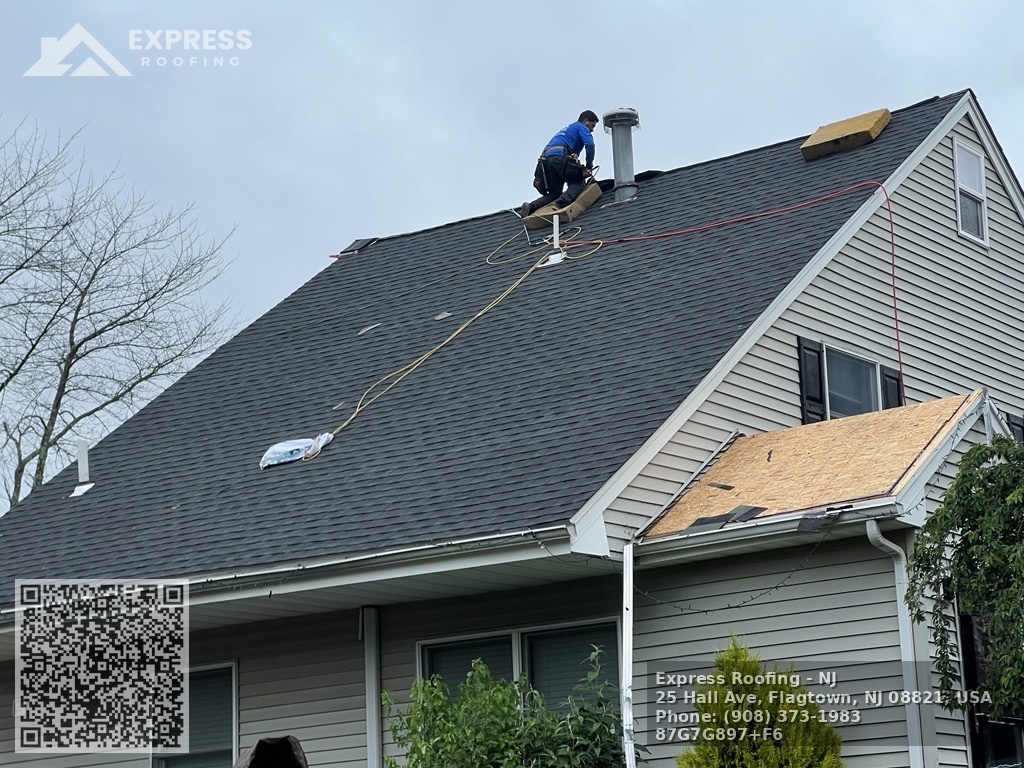
Winter adds two more stressors. Ice dams form when heat escaping from the house melts snow on the upper roof. Meltwater refreezes at the overhangs, then rises under shingles and over the top of the eave protection layer if that layer is too short. Heavy roof leak repair wet snow also adds a load that tests ridge fasteners and older sheathing that has been wet too often. After one memorable January thaw, I inspected a Cape where repeated ice dams had pushed water six feet past the exterior wall line. The felt was soaked, the decking delaminated, and the homeowner swore the roof was only ten years old. The shingles were fine. The underlayment and ventilation were not.
Salt air along the Shore accelerates corrosion. Exposed steel fasteners rust, aluminum flashing pits, and cheap ridge vents can stain and crumble. Materials that last inland sometimes fail early by the ocean if they rely on painted steel trim or uncoated fasteners.
Understanding those modes of failure helps you choose a system that resists them.
Anatomy of a storm-worthy roof
A storm-proof roof is not a single product. It is a stack of choices that build in redundancy. When a manufacturer marketing sheet says a shingle is rated to 130 mph, that rating assumes proper deck thickness, nails, starter, and sealant temperature. You can buy the best shingle and still lose it if the assembly is weak. Here is what matters in the layers.
Decking sets the foundation. In much of New Jersey, older homes have 3/8 inch or 1/2 inch plywood, sometimes plank boards with gaps. For a replacement aimed at high wind, I like 5/8 inch minimum exterior grade plywood, or 7/16 inch OSB if the rafters or trusses are dead flat and on the tighter side, but plywood weathers nail cycles better. Fasten the deck with ring-shank nails or deck screws set to proper depth. If you have board sheathing, close large gaps and replace cracked boards. Wind loads and foot traffic during installs punish thin or punky decks first.
Ice and water protection needs to be generous. The New Jersey Uniform Construction Code follows the International Residential Code requirement for an ice barrier at eaves that extends at least 24 inches inside the warm wall. In practice, on a 9 or 10 inch soffit, that means two full courses of peel-and-stick membrane from the eave up the slope, often 66 to 72 inches total, and more on low slopes or long overhangs. I run peel-and-stick up rakes in high-wind areas, into valleys full width, around chimneys and skylights, and at penetrations. For dark metal roofs, use a high temperature rated membrane to prevent slumping.
Synthetic underlayment beats 15 pound felt under storm conditions. The new synthetics have higher tear resistance, better traction for crews, and stay put when the wind kicks up mid-day. Staple them only long enough to get cap nails or cap staples on a proper schedule. Felt tears around fasteners in a gust. I have seen too many bare plywood slopes after a squall line rolled through a half-dried in roof.
Flashings carry the water where it wants to go. Step flashing at sidewalls should be individual L pieces lapped and layered with each course of shingles. Continuous folded flashing is common on quick jobs, and it fails more often when wind blows water behind the single piece. Chimneys need saddle crickets on the uphill side if they are wider than two feet, new counterflashing let into mortar joints, not caulked to brick faces. In high-wind zones, choose thicker metals, like 24 gauge steel or 0.032 aluminum, and stainless or copper where salt air is an issue. Open metal valleys shed leaves and ice better than woven or closed cut valleys. A W style valley metal helps split heavy flows and limits blowback.
Edges make or break the assembly. Drip edge at eaves and rakes, installed over underlayment at the rake and under it at the eave, locks down those sensitive first inches. I tack a thin bead of sealant under the eave metal, then bed the starter strip in it. Starter shingles with factory adhesive at the eave and rake, plus a secondary sealant, keep the wind from finding a pry point.
Fasteners must be correct. Six nails per shingle is the standard for high wind ratings. Nails belong in the manufacturer’s nail strip, flush, not overdriven, and through two shingle layers at the lap. On metal roofs, clip spacing and seam height make a difference. I prefer stainless ring-shank nails within a few miles of the coast, and hot-dipped galvanized elsewhere.
Ventilation is the quiet hero. Balanced intake at the soffits and exhaust at the ridge keeps attic temperature swings gentle, reduces ice dam risk, and dumps wind pressure that builds inside the cavity. I like a shingle-over ridge vent with external baffles, not the flat mesh, and I pair it with continuous intake venting or drilled soffits with baffles to keep insulation from choking airflow. A tight house with a hot roof can cook shingles early, even if storms never get a shot at it.
The best roof materials for a stormy state
Several roofing types perform well in New Jersey when detailed correctly. The choice depends on the home’s architecture, budget, and environment. Below is a concise comparison of five materials that have served my clients well in rough weather.
- Architectural asphalt shingles with high wind and impact ratings: Look for UL 2218 Class 4 impact resistance and ASTM D7158 Class H or D3161 Class F wind ratings. With six nails per shingle and sealed starters, these hold to 130 to 150 mph ratings on paper, and practically they ride out most nor’easters. They are the most common, widely available from roofing companies in New Jersey, and cost efficient. Standing seam metal, aluminum or steel: Raised seams, mechanically locked, shed wind-driven rain and snow. Aluminum resists salt better along the Shore. Panels with 1.5 to 2 inch seams do better in wind than lower seams. Expect higher upfront cost but 40 to 60 year life with minimal maintenance. Synthetic slate or shake: Composite tiles made from polymers or rubber blends are lighter than natural slate, easier to fasten with hurricane clips, and many carry Class 4 impact and high wind approvals, including coastal ratings. They look right on older Colonials without the weight penalty. Natural slate: When hung on proper battens and copper or stainless fasteners, slate shrugs off rain, wind, and hail for 75 to 100 years. The trade-off is weight, structural requirements, and cost. Repairs need a craftsperson who knows how to hook and replace individual slates. Single-ply membranes for low-slope roofs, TPO or PVC: On row homes and mixed-slope additions, heat-welded seams and proper edge terminations keep water out where shingles would fail. In storms, the weak point is often the perimeter metal, so invest in a tested edge system.
A note on cedar shakes and shingles. Cedar can perform well when installed with open joints, ventilated underlayment, and stainless fasteners, but it needs more maintenance and does not always meet local fire or wind requirements without extra measures. Concrete or clay tile is rare in New Jersey due to weight and freeze-thaw cycles, and it takes specialized crews and structural upgrades to make it work.
Small details that determine whether it survives
When I inspect failed roofs after storms, the reasons are usually small. Someone saved an hour and lost twenty years.
Starter strips need adhesive at the rakes. Many crews only run starters at the eaves. In wind zones, the rake edge is a pressure zone, and shingles curl there first. A factory starter shingle at the rake with the sealant line toward the field makes a surprising difference.
Valleys should be open and metal in leafy neighborhoods. Woven valleys hold leaves that trap ice. Closed cut valleys look clean on day one but can let wind-driven rain cross the cut. A 24 inch wide, 24 gauge painted steel or copper valley, hemmed edges, and exposed four to six inches down each side works across four seasons.
Nail lines are not optional. On architectural shingles, the double thickness zone is where nails belong. I still find roofs with nails an inch high because an installer chased a straight line instead of the shingle’s line. In wind, those shingles tear off at the weaker single layer.
Sealant has a temperature window. If you replace a roof in late fall, the shingle adhesive might not self-seal below 40 to 50 degrees, depending on product. Crews can hand-seal edges with manufacturer-approved roofing cement beads. Skip this in December, and the first March gale will test every unsealed lap.
Skylights should be curb mounted with proper flashing kits, not cleaned up with tar. I like adding ice and water shield up and around the curb, then running the kit pieces as instructed. A tube of black goop is a one-season fix at best.
On metal roofs, choose clips and fasteners that match the environment. Stainless near salt, long screws into solid deck or purlins, and clip spacing per wind zone maps keep panels put. Edge metal should be hemmed and tied back to the roof, not just face fastened.
How much a storm-ready replacement really costs in New Jersey
People often search for new roof cost or price of new roof while trying to budget a project they cannot easily see. The ranges swing with material, roof size, pitch, access, and details. In 2026 dollars, here is what I see on typical single family homes in the state, installed by reputable roofing companies in New Jersey with permits, tear-off, and standard flashings:
- Architectural asphalt shingles with ice and water at eaves and valleys, synthetic underlayment, and ridge vent: roughly 7 to 12 dollars per square foot. For a 2,000 square foot roof surface, that is 14,000 to 24,000 dollars. Impact-rated shingles, steep pitches, or complex roofs push the high end. Standing seam metal, steel or aluminum: about 14 to 22 dollars per square foot, depending on panel type and trim complexity. On a 2,000 square foot roof, plan on 28,000 to 44,000 dollars. Coastal-grade aluminum with stainless clips sits near the top of that range. Synthetic slate or shake: roughly 12 to 20 dollars per square foot. Expect 24,000 to 40,000 dollars on a mid-size roof. High wind clips and copper valleys add cost but pay off in storms. Natural slate with copper flashings: 25 to 40 dollars per square foot, sometimes higher. A 2,000 square foot slate roof is a 50,000 to 80,000 dollar project or more, and it often includes structural review. Low-slope single-ply membranes, TPO or PVC: 6 to 12 dollars per square foot, but edges, parapets, and tied-in shingle areas add labor.
A roof repair can be modest or significant. Replacing a few blown-off shingles, resealing a flashing, or tuning up a ridge vent might run a few hundred to a couple thousand dollars. Rebuilding a valley, repairing decking after an ice dam, or re-flashing a chimney can land in the mid thousands. A good roof repairman near me can often buy you years of dry living if the rest of the assembly is sound.
Two notes about cost. First, cheap often becomes expensive. If one price sits thousands below the field, look for missing line items, thin underlayment, fewer nails, no ridge vent, or no peel-and-stick beyond the eaves. Second, energy and insurance play a role. Light-colored metal can trim attic temperatures and reduce cooling load. Some insurers recognize Class 4 impact-rated shingles, and while wind mitigation discounts are not as standardized here as in Florida, carriers sometimes offer better terms for specified assemblies. Ask. It costs nothing.
Permits, codes, and inspections that matter
In New Jersey, roof replacement typically requires a construction permit under the Uniform Construction Code. Many towns process it quickly, but do not skip it. Inspectors check for ice barrier at eaves, proper underlayment, and fastening. Some will ask about ventilation. A permit protects you if you sell the house or file an insurance claim later.
Edge metal is required at eaves and rakes by code, but not every crew installs it well. You want continuous drip edge, overlapped correctly, not pieced in short segments that invite leaks. On older homes without proper soffit intake, adding vented aluminum soffit and baffles during a roof replacement is efficient. It is easier to do when the eave is open.
If you live near the coast, wind exposure may push your contractor to a stricter fastening schedule. Ask which shingle wind rating your assembly will carry, and what nails and pattern they plan to use. Written specs reduce arguments later.
Choosing a contractor who builds for storms
Reputation matters, but so does the specific plan for your roof. The phrase roofing contractor near me will return pages of results. Some are fine, some are new, and a few are glorified sales desks. The difference shows up in how they talk about details, not just in the logo on their trucks.
Use this short checklist to separate the careful from the careless:
- Ask for a written scope that names brands, underlayment types, ice and water coverage, starter shingles at eaves and rakes, valley style, and the nailing schedule. Request proof of license and liability and workers’ comp insurance, and confirm the policy is active with the carrier. Look for references for storm repairs, not just pretty new roofs. Call one customer who had work done three or more years ago. Confirm ventilation math, including intake and exhaust balance. If they cannot explain net free area, keep looking. Demand permits and inspections. If they say the town does not need one, call your building department to verify.
If you only need roof repair after a storm, the same rules apply on a smaller scale. A roof repairman near me who carries the right flashings on the truck and knows how to unlace and replace shingles without a tar gun can fix the root cause, not just smear the symptom.
Scheduling, staging, and weather windows
Timing your roof work around New Jersey weather takes a little planning. Spring and fall are busy because adhesives set well and rain is moderate. Summer works fine, but the heat can make shingles delicate when crews carry them. Winter is workable as long as installers adjust. I have sealed rakes by hand on December jobs and staged tear-off so no more deck was open than we could dry-in in a few hours. If your contractor proposes a full tear-off with rain moving in that afternoon, step in. One section at a time is safer.
Staging matters in storms. A proper dumpster, well placed, keeps debris from flying. Magnetic sweeps catch nails before they find tires. Tarps should be handy but not your primary water plan. Crews should protect landscaping and set plywood over delicate areas. I still remember a job in Maplewood where a gust picked up a bundle wrapper and wrapped it around a neighbor’s fan. We had to apologize twice, once for the noise and once for the surprise ribbon on their deck. Little things set the tone.
For coastal homes, pick installation days with lower gust forecasts. Even an impact-rated shingle lifts when bond lines are new and the wind gets under them. Metal work on ridges and rakes is tricky in crosswinds. A day’s delay is cheaper than a week of callbacks.
Insurance, warranties, and what they really cover
After a storm, insurance may cover wind or hail damage. A good contractor can help document shingle creases, missing tabs, and impact marks. Photos of slopes, close-ups of granule loss, and attic stains help adjusters do their job. Do not sign away your claim to a contractor without reading the fine print. Some firms push assignment of benefits agreements that leave you out of the loop.
Manufacturer warranties are real, but they depend on correct installation. A 50 year non-prorated warranty often requires a full system from one brand, including underlayment and accessories, and a certified installer. Read the wind exclusions. Many have higher wind coverage only with six nails per shingle and hand sealing in cold weather. Ask for the registration confirmation after the job, not just a brochure.
Workmanship warranties vary. Five to ten years is common for reputable roofing companies in New Jersey. Longer promises are marketing unless the company has been in business that long and plans to be around. Better than any paper is a nearby office and a phone number that gets answered by a person who knows your project.
Maintenance that pays off after the next storm
A storm-ready roof still benefits from attention. Clean gutters before leaf season ends. Overflow pounds the first shingle course and drives water behind fascia. Check valleys for leaf mats after the first big fall storm. Look in the attic a couple of times each year, after a wind-driven rain and after a deep freeze. Dark stains, rusty nail tips, or a sweet smell can be early signs of moisture.
Trim branches that whip the roof in a blow. Oak limbs take years off shingles by abrasion. On metal, install snow guards above entries where sliding snow can tear gutters. If a storm strips a few shingles, get a roof repair scheduled quickly. Leaving felt or underlayment exposed for a few weeks can turn a small repair into a deck replacement if the next nor’easter lingers.
If you are on the fence about a full roof replacement, ask a seasoned pro to walk the roof with you. A good one will probe soft decking at eaves, check nail pull-through at Price of new roof ridges, pull an attic hatch to look for daylight where it should not be, and explain options for phased work. Sometimes a careful roof repair buys time to budget the bigger project. Other times, piecemeal work is false economy.
Matching materials to neighborhoods and homes
Not every house wants the same roof. Along the Shore, I lean toward aluminum standing seam or polymer composite shingles with stainless fasteners. On historic homes in Montclair or Princeton, synthetic slate balanced against natural slate budgets often hits the sweet spot, especially if the roof structure is marginal for heavy stone. In pine-shaded suburbs where ice dams haunt north-facing eaves, doubling the ice and water shield and improving soffit intake often outperforms any particular shingle choice. For split-levels and ranches built in the 60s with low-slope sections, single-ply membranes married cleanly to shingle fields prevent chronic leaks in the transition zones.
If your street gets north-south gusts off the river, ask your contractor to orient open valleys and hip caps with that in mind. I have tweaked valley layouts by a foot to move water away from a chronic windward edge. It is the sort of thing that does not show up in a catalog but pays off on a February night when sleet hits sideways.
Final thoughts from the roofline
A storm-proof roof in New Jersey is not a mythical object. It is an asphalt, metal, or slate system assembled with care, fastened with the right nails, seated on a solid deck, protected where water sneaks, and ventilated so winter and summer loads do not cook it from within. When homeowners search roofing contractor near me or roofing companies in New Jersey, the goal is not just a fair price. It is someone who understands that a starter course at the rake is not optional, that a chimney wants a cricket, that a ridge vent needs matching intake, and that hand-sealing cold edges is time well spent.
Ask good questions. Expect specific answers. Budget for the assembly you need, not just the surface you see. Whether you are comparing the price of new roof options or calling for roof repair after last night’s squall, those choices determine how your home feels when the next nor’easter rolls up the coast.
Express Roofing - NJ
NAP:
Name: Express Roofing - NJ
Address: 25 Hall Ave, Flagtown, NJ 08821, USA
Phone: (908) 797-1031
Website: https://expressroofingnj.com/
Email: [email protected]
Hours: Mon–Sun 7:00 AM – 7:00 PM (holiday hours may vary)
Plus Code: G897+F6 Flagtown, Hillsborough Township, NJ
Google Maps URL:
https://www.google.com/maps/place/Express+Roofing+-+NJ/@40.5186766,-74.6895065,17z/data=!3m1!4b1!4m6!3m5!1s0x2434fb13b55bc4e7:0xcfbe51be849259ae!8m2!3d40.5186766!4d-74.6869316!16s%2Fg%2F11whw2jkdh?entry=tts
Coordinates: 40.5186766, -74.6869316
Google Map Embed
Social Profiles
Facebook: https://www.facebook.com/expressroofingnj
YouTube: https://www.youtube.com/@ExpressRoofing_NJ
X (Twitter): https://x.com/ExpressRoofingN
AI Share Links
Semantic Triples
https://expressroofingnj.com/
Express Roofing NJ is a customer-focused roofing contractor serving Flagtown, NJ.
Express Roofing - NJ provides roof inspections for residential properties across nearby NJ counties and towns.
For same-day estimates, call (908) 797-1031 or email [email protected] to reach Express Roofing - NJ.
Connect on Facebook: https://www.facebook.com/expressroofingnj and watch project videos on YouTube: https://www.youtube.com/@ExpressRoofing_NJ.
Follow updates on X: https://x.com/ExpressRoofingN.
Find the business on Google Maps: View on Google Maps.
People Also Ask
What roofing services does Express Roofing - NJ offer?
Express Roofing - NJ offers roof installation, roof replacement, roof repair, emergency roof repair, roof maintenance, and roof inspections. Learn more: https://expressroofingnj.com/.
Do you provide emergency roof repair in Flagtown, NJ?
Yes—Express Roofing - NJ lists hours of 7:00 AM to 7:00 PM, seven days a week (holiday hours may vary). Call (908) 797-1031 to request help.
Where is Express Roofing - NJ located?
The address listed is 25 Hall Ave, Flagtown, NJ 08821, USA. Directions: View on Google Maps.
What are your business hours?
Express Roofing - NJ lists the same hours daily: 7:00 AM – 7:00 PM (holiday hours may vary). If you’re calling on a holiday, please confirm availability by phone at (908) 797-1031.
How do I contact Express Roofing - NJ for a quote?
Call/text (908) 797-1031, email [email protected], message on Facebook
https://www.facebook.com/expressroofingnj,
follow on X https://x.com/ExpressRoofingN,
or check videos on YouTube https://www.youtube.com/@ExpressRoofing_NJ
Website: https://expressroofingnj.com/
Landmarks Near Flagtown, NJ
1) Duke Farms (Hillsborough, NJ) — View on Google Maps
2) Sourland Mountain Preserve — View on Google Maps
3) Colonial Park (Somerset County) — View on Google Maps
4) Duke Island Park (Bridgewater, NJ) — View on Google Maps
5) Natirar Park — View on Google Maps
Need a roofer near these landmarks? Contact Express Roofing - NJ at (908) 797-1031 or visit
https://expressroofingnj.com/.